Artificial Grass Installation in Batley: Preparing Uneven Ground and Ensuring Proper Drainage
Artificial grass installation in Batley and across West Yorkshire. We lay it right, on proper sub-base, so it drains well and lasts. Free quotes available.

Clay Soil, Heavy Rain and a Lawn That Never Quite Works
Batley gardens are tough on natural grass. The soil through much of this part of West Yorkshire is heavy clay, slow to drain and quick to compact. Add the rainfall that rolls in off the Pennines and you get a lawn that spends half the year waterlogged and the other half baked hard. Grass struggles. Moss thrives. The surface turns to mud the moment anyone walks on it.
We see it constantly across Batley and the surrounding areas. A garden that looked fine in the estate agent photos, or held up well enough when the kids were small, has become a muddy strip that nobody wants to use. The grass is patchy, the edges are ragged, and no amount of reseeding seems to fix the underlying problem.
Artificial grass is not a shortcut. Installed properly, over the right sub-base, with correct drainage, it is a genuine solution to a genuine problem. Installed badly, it is a soggy, uneven mess that smells in summer and lifts at the edges within a year. The difference is entirely in the preparation.
What Proper Artificial Grass Installation Actually Involves
This is where a lot of installations go wrong. People assume artificial grass just gets rolled out and pegged down. The visible surface is maybe ten percent of the job.
Here is what we do on every installation:
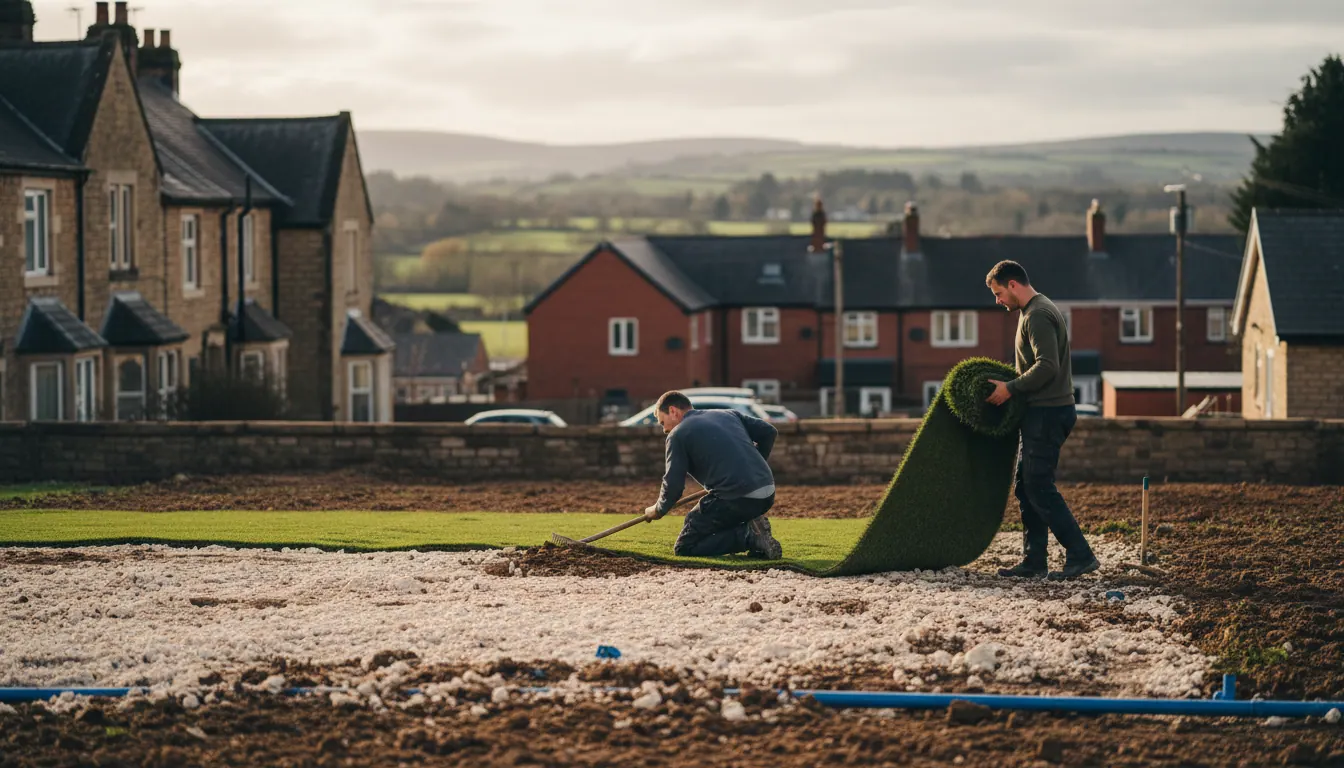
Strip and excavate. We take out the existing lawn, soil and any organic material to a consistent depth. On clay ground in Batley, that typically means going deep enough to get well below the topsoil layer. Organic material left underneath will break down, causing the surface to sink and the joins to open up.
Install a weed membrane. A proper geotextile membrane goes down before anything else. This is not the thin garden-centre stuff. It needs to be permeable enough to let water through but robust enough to stop weeds pushing up over time.
Lay a compacted sub-base. This is the part that matters most. We use MOT Type 1 crushed stone, laid and compacted in layers. This creates a stable, free-draining foundation. On Batley's clay soil, this step is non-negotiable. Without it, the surface will move, pool water and break down unevenly. The depth and compaction of the sub-base determine whether the finished lawn still looks right in five years.
Add a sharp sand layer and level. On top of the compacted stone, a layer of sharp sand is screeded level. This is where the final fall is set, so water drains towards the edges or a drain rather than sitting in the middle. Getting the fall right on a small, enclosed Batley yard often requires more careful reading of the ground than it does on an open garden.
Fit the grass. The roll is cut to fit, seamed where needed, and secured at the perimeter. Seams are the weak point in any installation. We take time to align the pile direction and make joins as invisible as possible.
Kiln-dried sand infill. The grass is brushed up and infill sand is worked in. This keeps the fibres upright, adds weight to hold the surface stable, and helps the lawn feel and look natural underfoot.
Every stage matters. Skip one, and the job fails. It is that straightforward.
Why Batley Gardens Specifically Benefit From Artificial Grass
There are a few things about Batley plots that make artificial grass a particularly good fit.
Many of the gardens here are small. Victorian terraced yards, semi-detached properties with compact back gardens, newer estates where the rear garden is more of a square than a sweep. A small lawn on clay is almost impossible to maintain well. It gets worn in the middle, muddy at the edges and moss-covered in the corners. Artificial grass transforms those spaces into something genuinely usable year-round.
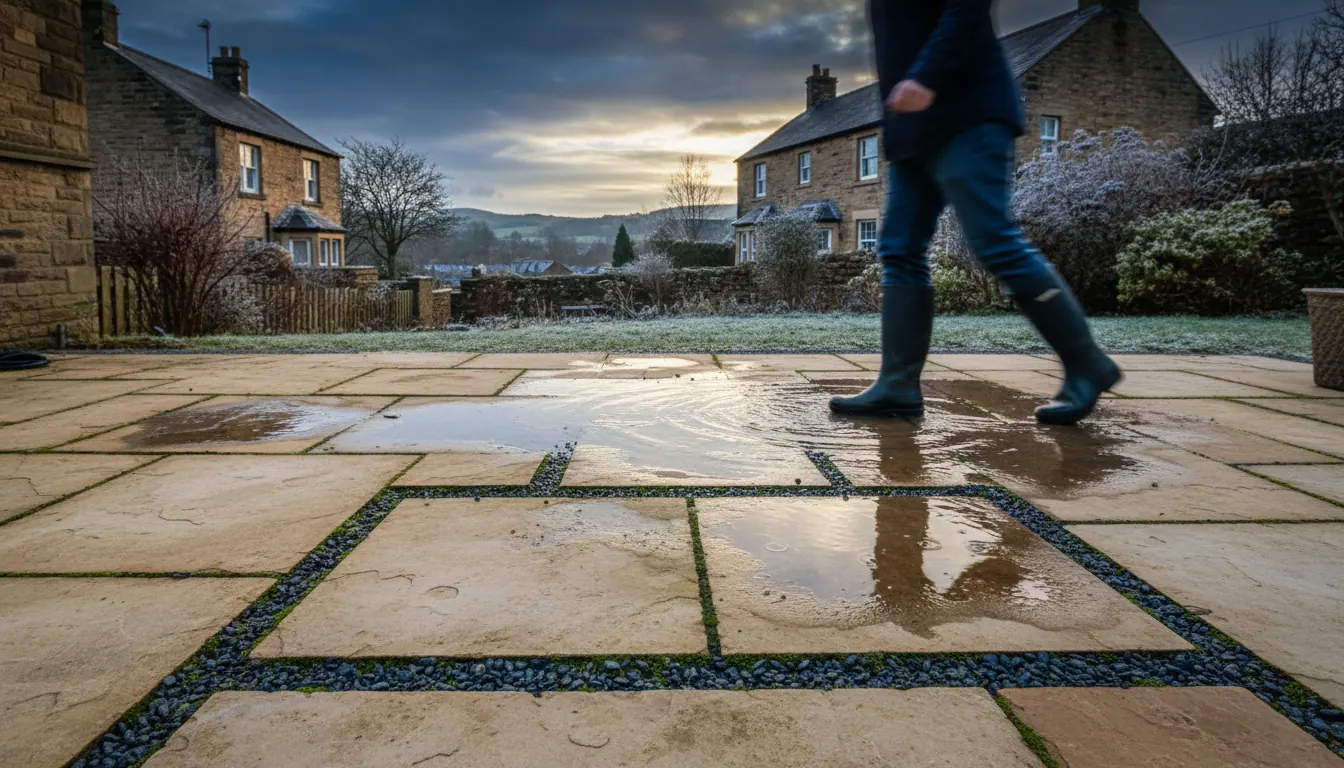
The clay soil is also a factor in how we approach drainage. Water needs somewhere to go. On a flat, enclosed yard, we may need to incorporate a perforated pipe drain or a channel drain at the base of a wall. We assess this at the quoting stage, not as an afterthought once the grass is already down.
Shade is another common issue. Many Batley gardens face north or are overlooked by the house or a wall for much of the day. Natural grass in deep shade rarely thrives. Artificial grass looks consistent regardless of light levels, which makes a real difference in those tight, overlooked plots.
Choosing the Right Artificial Grass for a West Yorkshire Garden
Not all artificial grass is the same, and the choice of product matters alongside the installation quality.
Pile height, density, fibre shape and colour all affect how a lawn looks and wears. For a family garden in Batley that will see regular foot traffic, a mid-pile grass with a good density is the practical choice. Very short pile looks neat but feels hard underfoot. Very long pile looks lush initially but can flatten with heavy use.
Colour is worth thinking about. The best products have a mix of shades and include a thatch layer at the base, which mimics the natural variation of a real lawn. A single, uniform green looks artificial in a way that a well-chosen mixed product does not.
We talk through the options with every customer at the quoting stage. There is no point us specifying something that will not suit how the garden gets used.
Artificial Grass Alongside Other Landscaping Work
Artificial grass rarely works in isolation. The jobs we do in Batley and across West Yorkshire almost always combine it with other elements, and the result is a far more finished, usable garden.
A paved seating area or patio alongside an artificial lawn gives the garden a clear structure. Stone or porcelain paving at the back of the house, artificial grass filling the rest of the space, a neat edging strip between the two. It is a simple layout that works well in small gardens because every surface has a purpose.
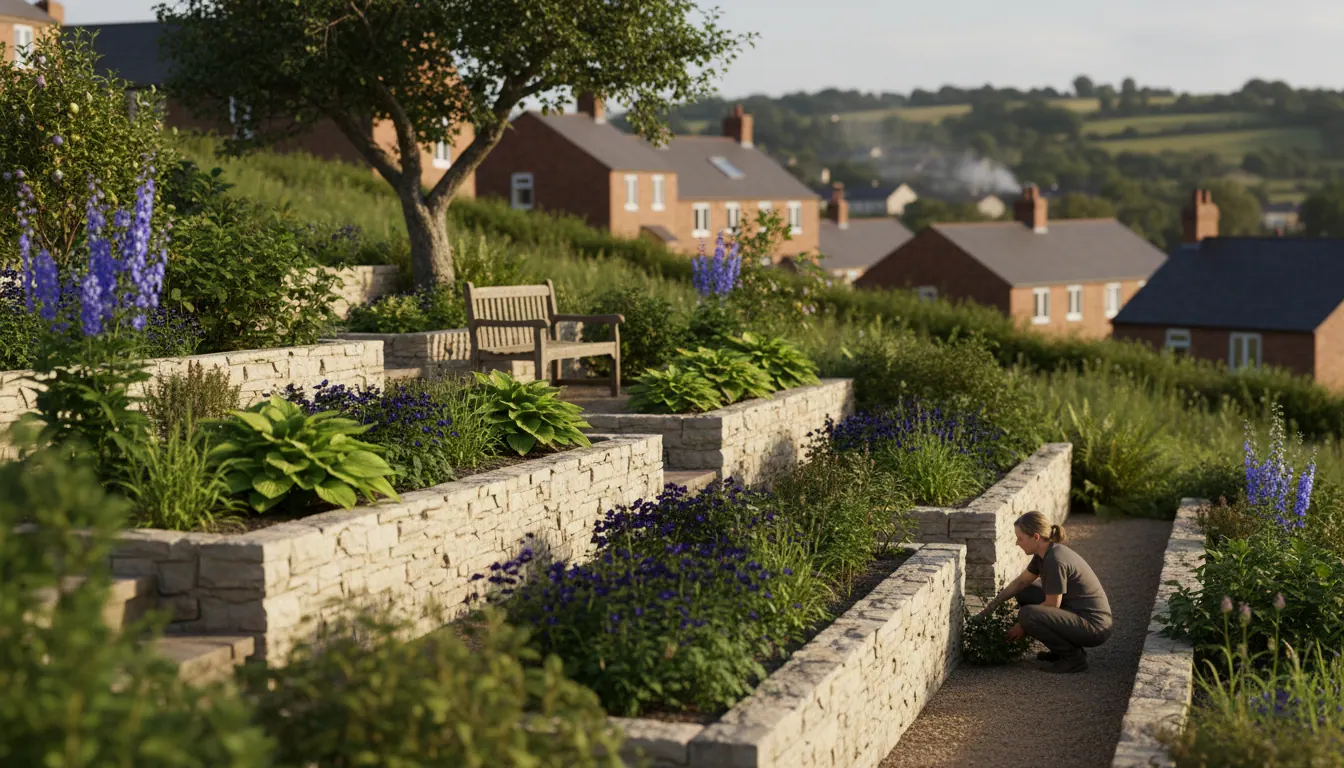
Raised beds or a garden wall along the boundary can lift the whole space. Sleeper-edged raised beds alongside an artificial lawn are a combination we do regularly. They add height, give somewhere for planting, and frame the grass neatly.
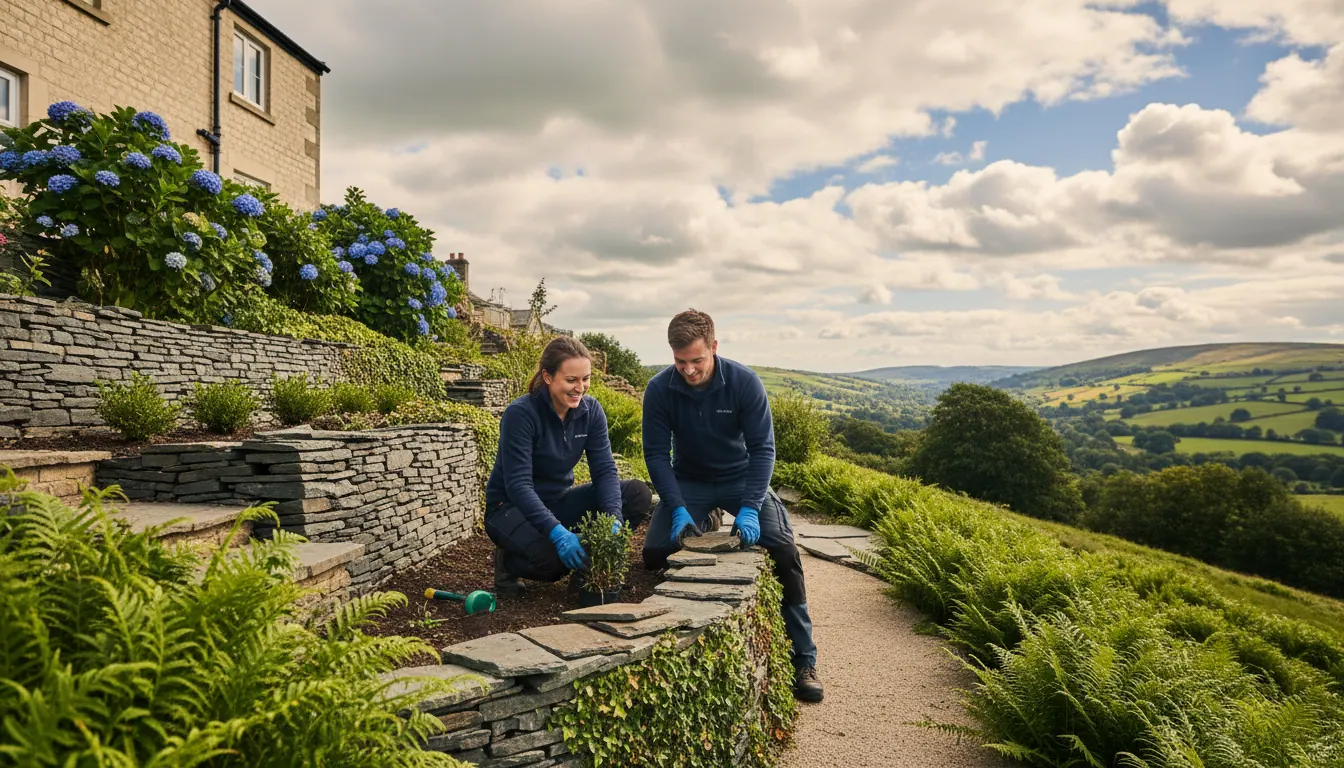
If the garden slopes, terracing may be needed before the grass goes down. A level surface is essential for artificial grass to look right and drain properly. We do the groundwork, the retaining structure and the grass installation as one job, not three separate visits from three separate people.
For more on how we approach sloping plots, our article on retaining walls and terracing in Yorkshire covers the approach in detail.
How Long Does Artificial Grass Last?
A well-installed artificial lawn, on a proper sub-base, will look good for many years. The grass itself is UV-stabilised to resist fading. Maintenance is minimal: brush it occasionally to keep the fibres upright, rinse it down if needed, and clear any debris that collects on the surface.
The sub-base, if it has been compacted correctly, should not shift or settle. The edges, if they have been secured properly, should not lift. The seams, if they have been laid with care, should remain invisible.
The finish is everything. That is what we are focused on from the first day of excavation to the last brush of the infill.
We Cover Batley, Huddersfield, Wakefield, Dewsbury and the Surrounding Areas
Artificial grass installation is something we carry out across West Yorkshire and into South Yorkshire. Batley, Huddersfield, Wakefield, Dewsbury, Barnsley, Penistone and the surrounding areas. Gardens vary from compact Victorian yards to larger family plots on newer estates, and the approach is adapted to each one.
If you are thinking about artificial grass alongside a broader garden redesign, our article on artificial grass for low-maintenance family gardens in Wakefield covers how we approach those larger-scale transformations.
Quotes are free. We come and look at the garden, talk through what is needed, and give a clear quote based on what we actually find.
Frequently Asked Questions
Can artificial grass be installed on a clay soil garden in Batley? Yes, and it is often the best solution for exactly that situation. The key is the sub-base. On clay ground, we excavate deep enough to remove the unstable topsoil layer, then compact a proper Type 1 stone sub-base before anything else goes down. This creates a stable, free-draining foundation that clay soil on its own cannot provide.
Does artificial grass drain properly in heavy Yorkshire rain? A well-installed artificial lawn drains through the backing of the grass and through the sub-base below. On enclosed or flat plots, we assess whether a perimeter drain or channel drain is needed to handle peak rainfall. The fall of the surface is set during the screeding stage, so water moves off rather than pooling in the middle.
How long does artificial grass installation take? For a typical Batley back garden, the installation takes two to three days. Larger or more complex jobs, particularly those involving terracing or drainage work beforehand, will take longer. We give a realistic timeframe at the quoting stage.
Can I have artificial grass and a patio in the same garden? Absolutely, and it is a combination we recommend for small gardens. Paving near the house for seating and outdoor dining, artificial grass filling the remaining space. The two surfaces sit neatly against each other with a clean edging strip between them. It makes the garden feel structured and low-maintenance in one go.
Get in Touch
If your Batley garden has been a muddy, patchy problem for long enough, we are ready to come and look at it. We will tell you honestly what is needed, what the job involves, and give you a free quote. Call us on 07359 173155 and we will take it from there.