Garden Design for Shade: Making Small Backyards Work in Terraced Barnsley Homes
Shaded, sloping or terraced garden in Yorkshire? We design and build gardens that work with the space, not against it. Serving Batley, Wakefield, Barnsley and beyond.

Shade, slope and stone: the reality of Yorkshire terraced gardens
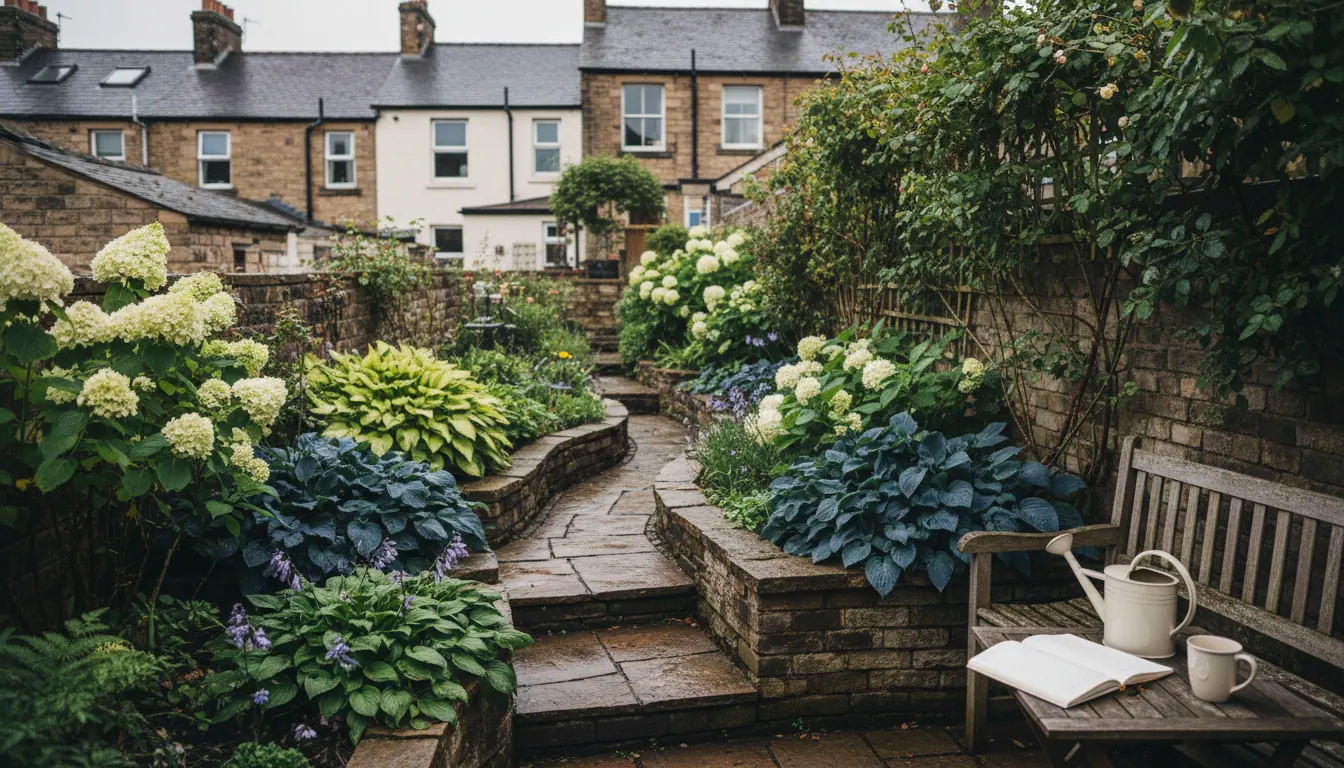
Batley, Dewsbury, Huddersfield, Penistone. The terraced streets that run across West and South Yorkshire share something beyond the stone-built houses: the gardens behind them are almost always awkward. Narrow. Sloping. Hemmed in by walls and fences. And shaded for a good chunk of the day by the house itself, the next-door property, or the row of sycamores that have been there since before anyone can remember.
These are not easy gardens to design. But they are exactly the kind we work with every day.
Over 20 years of landscaping across West Yorkshire and South Yorkshire, we have transformed hundreds of plots that homeowners had given up on. The brief is nearly always the same: "We can't grow anything, the lawn is a mess, and we don't know where to start." By the time we leave, it is a usable, good-looking outdoor space that works with the conditions rather than fighting them.
This article is about how we approach shaded and terraced gardens across Yorkshire, what the real problems are, and what a proper design and build actually looks like.
Why shaded terraced plots are so difficult to get right
The shade itself is only part of the problem. What makes Yorkshire terraced gardens genuinely tricky is the combination of factors that tend to arrive together.
Shade. North-facing or side-return plots can sit in shadow for most of the day. Grass struggles. Moss takes over. The soil stays damp even in dry spells.
Slope. The Pennine edge means most gardens in Huddersfield, Penistone and the surrounding areas have a gradient. Sometimes it is gentle. Often it is not. A sloping garden that has never been terraced properly just drains water into one corner, leaves you with an unusable lawn, and makes any kind of seating area impossible.
Clay soil. Heavy clay is the default across a lot of West Yorkshire. It compacts, it puddles, and it makes a lawn look tired by October every year. Drainage is not optional here: it is the foundation of everything else.
Enclosure. Terraced properties often have boundary walls on two or three sides. These can be an asset if they are in good condition. If they are not, they need addressing before anything else happens.
Get the design right and these problems become features, not liabilities. A terraced layout with well-built retaining walls creates usable flat zones on a slope. Good drainage beneath a patio or lawn turns a waterlogged corner into a functioning space. The right surface choices mean the shade stops mattering.
Terracing: turning a slope into a garden
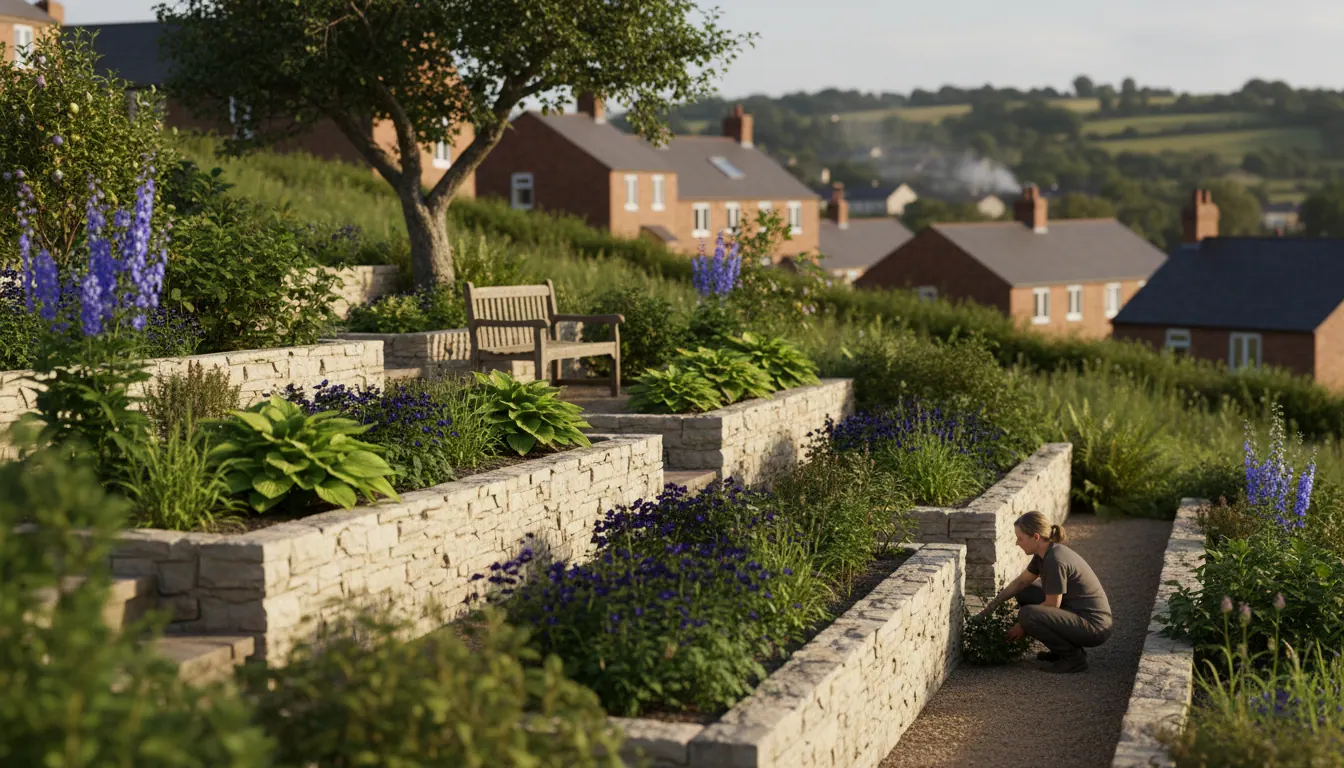
The most common design move we make on sloping Yorkshire plots is terracing. This means cutting into the slope, building retaining walls to hold the levels, and creating two or three flat areas that each have a purpose.
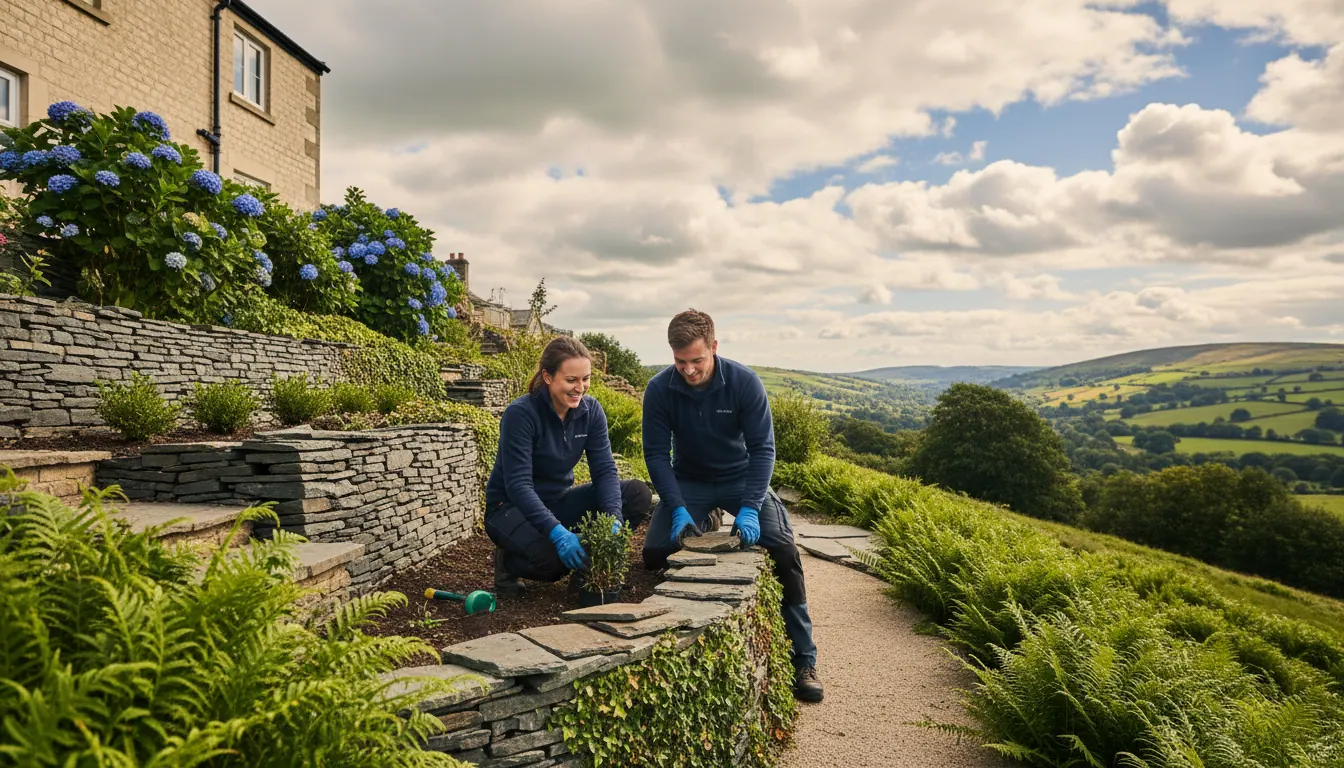
We build retaining walls in natural stone, slate-faced block, or timber sleepers depending on what suits the house and the garden. Stone-built properties in Batley and Dewsbury often suit a natural stone or slate-faced wall that ties into the character of the building. More contemporary gardens on newer estates around Wakefield might suit clean-faced blocks or stacked sleepers.
The engineering matters as much as the aesthetics. A retaining wall that is not built with adequate foundations, drainage behind it, and the right mortar mix will move, crack and eventually fail. We have rebuilt plenty of walls that looked fine on the surface but had no proper backing drainage. Yorkshire winters will find every weakness.
For more on how we approach this kind of structural garden work, take a look at our article on retaining walls and terracing: building usable spaces on sloping gardens in Yorkshire.
Surface choices for shaded Yorkshire gardens
Shade eliminates some options and makes others obvious.
Real turf in shade rarely thrives. On a north-facing plot in Batley or a garden that gets two hours of direct sun a day, you are fighting a losing battle with grass. It goes thin, mossy and muddy. You can improve it with the right preparation, drainage and shade-tolerant seed, but the results are rarely what people hope for.
Artificial grass is a straightforward answer for shaded plots where a lawn look is still wanted. It holds its colour and texture regardless of light levels, needs no mowing, and drains properly when it is laid over a well-prepared sub-base. It is particularly popular in smaller terraced yards where a real lawn was never really viable.
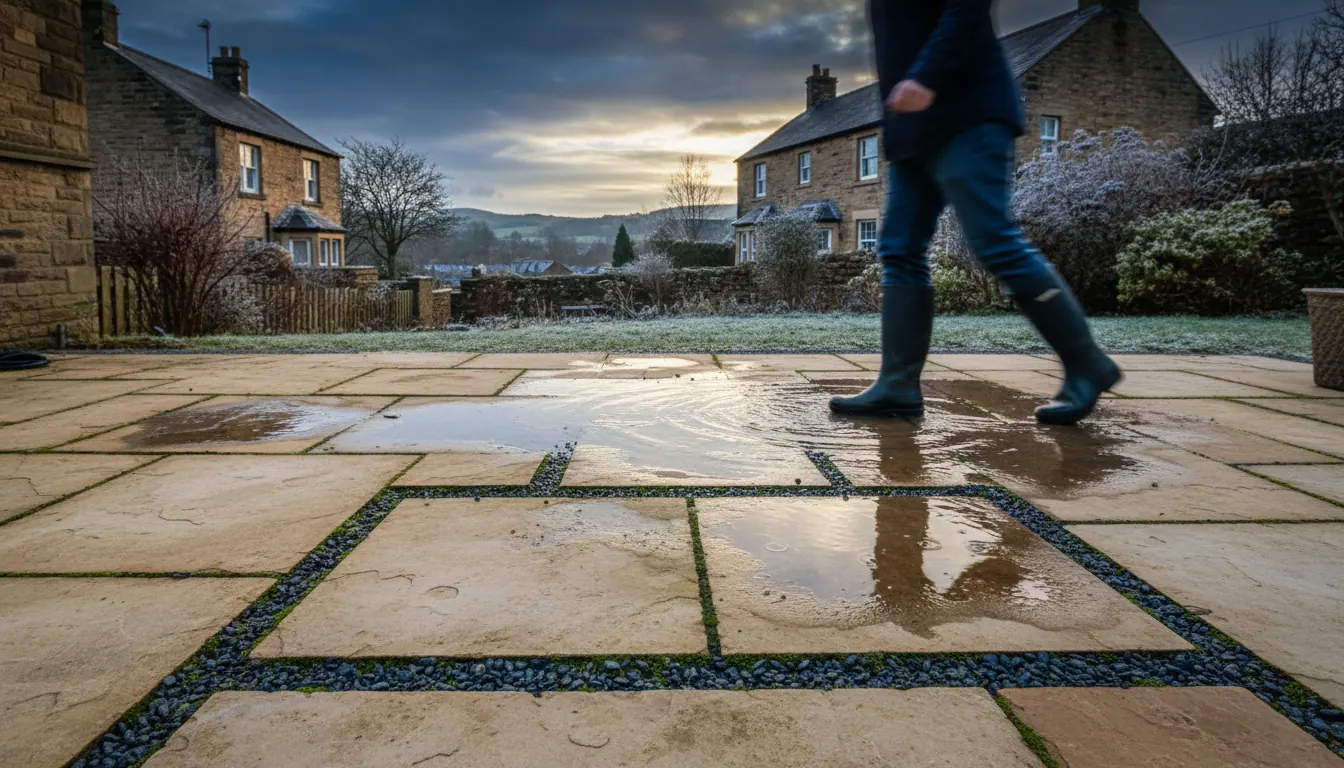
Porcelain and Indian sandstone paving both work well in shade, but they behave differently. Porcelain is denser, less porous, and far more resistant to the freeze-thaw cycles that crack poorly-laid stone through a Yorkshire winter. Indian sandstone has more character and suits traditional stone-built properties well, but it needs proper bedding on a full mortar bed, not a spot-and-dab job, or it will rock and crack within a season. We covered this in detail in our piece on Indian sandstone patio installation in Huddersfield: what proper preparation means.
In shaded spots, surface texture matters too. A polished porcelain slab becomes a slip hazard when it is damp and in the shade. We specify textured or grip-finish porcelain for any area that is going to be permanently shaded and therefore permanently slightly damp.
Raised beds are one of the best design moves in a shaded terraced garden. They bring planting up to a level where it gets more light, they add structure and height to a flat or awkward space, and they give homeowners the ability to bring in better growing medium rather than battling the clay underneath. We build them in natural stone, slate-faced block or timber sleepers to match the rest of the garden.
Drainage: the thing that decides whether everything else lasts
You cannot design a shaded Yorkshire garden properly without addressing drainage. The shade keeps the ground damp. The clay holds water. The slope either sends it all to one corner or, if the garden has been levelled without proper falls built in, leaves it sitting in the middle.
Every patio we lay has falls built in from the start. The standard minimum fall is 1:80, running water away from the house. On shaded plots we often go steeper. Every retaining wall has drainage channels or weep holes behind it. Every lawn or artificial grass installation goes over a drainage sub-base, not just compacted soil.
It is not glamorous. Nobody photographs the sub-base. But it is what separates a garden that still looks right in five years from one that has started to sink, crack and pool.
Fencing and boundaries in enclosed Yorkshire gardens
The boundary treatment makes a big difference to how much light a shaded garden gets and how it feels to be in. Solid six-foot close-board fencing on three sides of an already-shaded plot can make it feel like a box.
We often suggest contemporary slatted fencing panels, which let air and some light through while still giving privacy. On plots where the boundary wall is sound, we can work with it rather than replacing it, adding coping or rendering to smarten it up. Where fencing does need replacing, composite materials are worth considering in exposed or permanently damp positions: they do not rot, they do not need treating, and they hold their look through Yorkshire winters.
Design approach: what we actually do on site
When we visit a shaded terraced garden in Batley, Barnsley, Dewsbury or anywhere else across our area, we start by understanding the levels. Where is the slope running? Where does the water go? Where does the sun reach, and for how long?
From that we work out what the garden can realistically become. Not every shaded plot can be transformed into a sun-trap entertaining space. But every one of them can become a usable, well-designed area that works with what it has. Sometimes that is a terraced layout with a paved seating area at the top and a low-maintenance planted level below. Sometimes it is a clean, simple paved courtyard with raised beds around the edges. Sometimes it is artificial grass with a stone border and a good boundary treatment.
We do not leave until it is pin-point perfect. That is not a phrase we use lightly. Levels, falls, joints, edges: every detail is checked before we pack up and go.
Frequently asked questions
Can you design a garden for a north-facing terraced plot in Yorkshire? Yes. North-facing and heavily shaded gardens are among the most common plots we work with across West and South Yorkshire. The design approach changes, the surface choices change, and drainage becomes even more important, but the result is a fully usable, well-finished garden. We assess the levels and light on site before we design anything.
What is the best surface for a shaded terraced garden? It depends on the specific conditions. Textured porcelain holds up well in permanently shaded, damp spots because it resists frost and does not get slippery as easily as polished finishes. Indian sandstone suits traditional properties and works well in shade if it is laid correctly on a full mortar bed. Artificial grass is the right call where a lawn look is wanted but real grass has no chance. We will recommend what suits your specific garden once we have seen it.
How do you handle slope and drainage in a terraced Yorkshire garden? We build terracing using retaining walls with proper foundations and drainage behind them, and we set every paved surface with falls built in from the start. Clay soils across West Yorkshire hold water, so drainage is never an afterthought: it is designed in at the groundwork stage.
Do you serve gardens in Batley, Barnsley and Dewsbury as well as Huddersfield? We cover Huddersfield, Batley, Dewsbury, Wakefield, Barnsley, Penistone and the surrounding areas across West and South Yorkshire. Quotes are free: we visit the site, look at what is there, and give you a clear picture of what we would do and what it involves.
If you have a shaded, sloping or awkward terraced garden across West or South Yorkshire and you want to know what it could become, call us on 07359 173155. We will come and have a look, no obligation, and give you a straight answer about what is possible.